
Indigo Renderer is an unbiased, photorealistic GPU and CPU renderer aimed at ultimate image quality, by accurately simulating the physics of light.
State of the art rendering performance, materials and cameras models - it's all made simple through an interactive, photographic approach
with few abstract settings, letting you concentrate on lighting and composing your imagery.
Indigo Renderer 4.4
We are proud to announce the official release of Indigo Renderer 4.4.
Indigo 4.4 brings denoising, a fabric material, GPU SSS, lightmap baking and more.
What's new in Indigo 4?
Brand new multi-GPU engine
Indigo's OpenCL-based GPU engine provides industry leading performance on Nvidia and AMD graphics cards. With a single modern GPU, it's approximately 10x faster than before. Simply add more GPUs and get the horsepower to quickly render incredible 4K images and animations.READ MORE
Workflow & UI enhancements
A dark UI mode. Interactive material previews and light layer thumbnails. RGB colour curves and snappy trackball navigation.These are just some of the new features making Indigo 4 the most streamlined and enjoyable version yet.
READ MORE
And a lot more ...
Fast SSS
Material preview
RGB colour curves
Interactive multi-region rendering
Light Layer thumbnails
Faster CPU Rendering
Queue override settings
Adaptive resolution
Contribution clamping
Trackball navigation
Filmic tonemapping
Measured BRDF support
Interactive aperture controls
Faster tonemapping
Pixel info picker
Adjustable light sampling
OpenEXR output settings
Improved MLT rendering
Optimised material models
Faster subdiv & displacement





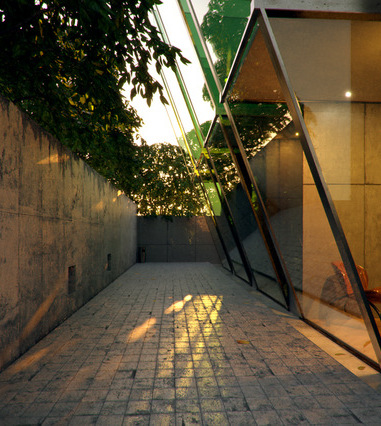

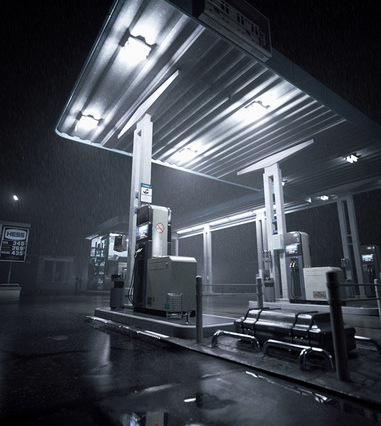
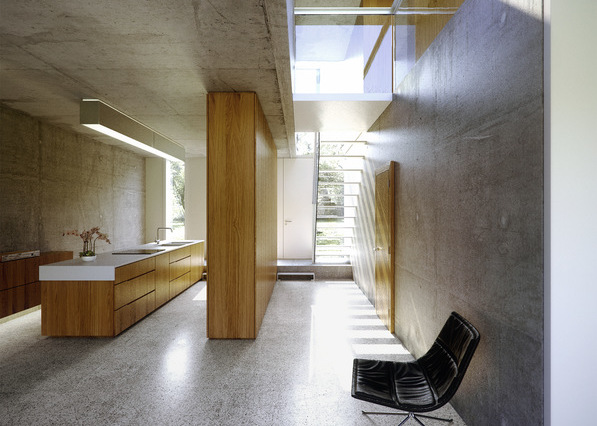

The rendering quality is awesome, and it's so fast than I can set up scene lighting with our technical art director about seven times faster than with our other render engineMateusz Sroka, Platige Image
Indigo is usually my go-to renderer: it handles massive scenes very well. It loads fast, it's reliable, doesn't crash and produces beautiful resultsTom Svilans, architect
Featured
"We simply love the lighting and the realistic look. Without the need of tweaking and faking light situations or GI render settings, Indigo simply renders it as it is... and so we can fully concentrate on color grading and subtle post production. Almost like you would do it with real filmed footage."
- David Gudelius, Senior CGI Artist
READ MORE
- David Gudelius, Senior CGI Artist
READ MORE
"... 35K objects, 201 million polygons, 804 light sources and hundreds of materials. Indigo crunched through this data without issues and allowed a workflow with quick previews and great output quality without tweaking 1001 settings like in some other renderers. With this reliability I could focus on content creation and tweaking material in the project."
- Arthur Liebnau, Freelance CGI artist
READ MORE
- Arthur Liebnau, Freelance CGI artist
READ MORE
News

Recent progress in the CUDA ecosystem
Less than a week after my previous post about how "only OpenCL can expose massively parallel compute capabilities in a vendor-neutral way", NVIDIA open-sourced their CUDA compiler! Obviously they are intently watching this blog, and had to react to my nay-saying.
Jokes aside, this is a big move f...
READ MORERecent progress in the OpenCL ecosystem
Recently AMD announced an increased focus on its Accelerated Parallel Processing SDK, promising more frequent updates tied to display driver releases on all platforms; AMD Product Manager for Compute Solutions Mark Ireton wrote on their developer blog, "[...] we will also be upgrading our OpenCL sol...
READ MORE
A bit more on UI improvements
As you may already know, we improved the material and medium editing user interface for the upcoming Indigo 3.2 release.
Another important change to this is the way materials and media are linked to each other. In Indigo 3.0, the link ui was just a simple dropdown, which worked, but was far from ...
READ MOREIndigo Shader Language and Winter talk
I gave a lightning talk (10 min talk) on Indigo Shader Language (ISL) and Winter, at the European LLVM User Group Meeting in London, on the 16th of September.
You can view the talk slides in PDF form here.
READ MOREImaging pipeline improvements in Indigo 3.0.14
The imaging pipeline collectively refers to the sequence of processing steps which result in the final displayed image. This consists of tone mapping, white point correction, light layer processing and the image resizing from the super-sampled source data.
Previously this would require a number o...
READ MOREMinimalist Indigo Renders by Stinkie
Indigo forum user Stinkie uses Indigo to render extremely lifelike renders of what look like minimalist, modernist constructions.
You can see more of Stinkie's work in the Indigo forum thread here: http://www.indigorenderer.com/forum/viewtopic.php?f=4&t=6639
READ MORE